Wood Cookstoves

Wood Cookstoves and Kitchen Ranges Need a Sweep Too

The First Fire of the Season

Before You Light the First Fire of the Year

That first cold evening always tempts people to strike a match, but a few minutes of checking beforehand can save a smoky living room. The answers below cover what to look at, what to clear away and when to wait. If your chimney in Abbotsford has sat idle all summer, it is worth a short call before the match comes out.
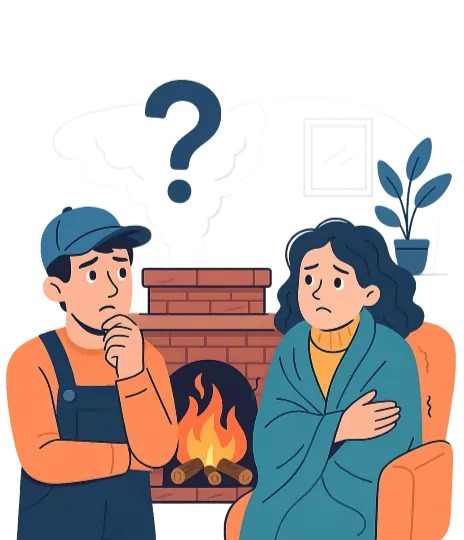

Keep furniture, curtains, drying clothes, newspapers and stacks of firewood out of the clearance zone around the stove, which the manual states. A small amount of firewood is fine if it sits outside that zone. Heat can ignite items without direct flames, and it can dry out nearby wood so it catches more easily. Make the rule simple: nothing flammable close to the stove, even for a short time.

It can if the wrong brush is used. Stainless steel and other metal liners are usually cleaned with polypropylene brushes, since stiff wire can scratch them and some manufacturers prohibit it. Masonry flues and clay tiles are different and can take a firmer brush. A technician matches the tools to the liner type, so mention what you have, especially if the liner is new.

Plan on a double handful of thin, dry sticks, from pencil-thick to about thumb-thick, plus a few wrist-sized splits to bridge the gap to the main logs. Too little kindling leaves the larger wood smoldering in a cold flue, while a huge pile just wastes effort. Build in stages and let each size catch before adding the next. You will quickly learn what your fireplace likes.

Each appliance is a separate job. A stove means disassembling the baffle, cleaning the pipe and chimney, and putting everything back, while a fireplace needs its own protection, brushing and firebox cleanup. If the two share a flue or have different flues, the technician may need more than one approach. Add the time for a safety check of each, and the visit grows accordingly.

Yes. When melted snow refreezes at the roof edge, water can back up under the shingles and find its way in at the flashing around the chimney. The cause is usually heat escaping into the attic, so extra insulation and air sealing around the chimney opening help. Keep the clearance rules for combustibles in mind when insulating around a flue.

Noise often comes from dust or pet hair collected on the blades, a loose mounting screw or worn bearings. Unplug the unit and let it cool, then vacuum the fan housing and tighten what is loose. A fan that buzzes or rattles at one speed may be out of balance. If the noise remains after cleaning, a replacement fan for your model is usually the next step, and the manual lists the part.
Before You Light the First Fire of the Year

Something Else?

Send us a note.

(778) 909-5649 Message Us

Project Details Form

If you add your address, we can plan your visit sooner.